 Share Predictions


AI options predictions
On market days, OpPreds predicts calls and puts with a buy target, two sell targets and a stop loss. Here is every closed one and the simulated result, wins and losses alike.
Simulated performance
How the simulation counts
It looks at the price of each option against its buy target. A loss is counted from the buy target to the stop loss, which can understate it if the price falls past the stop. A profit is counted from the buy target to the sell target, which can understate it if the price rises past the target. It is before fees and other trading costs, and real trades can turn out differently.
Closed options predictions
The latest 2,000, newest first, each with how it ended and its simulated result.
| Contract | Result | Result % | Buy | 1st target | 2nd target | Stop loss | Added | Closed |
|---|
Open options predictions

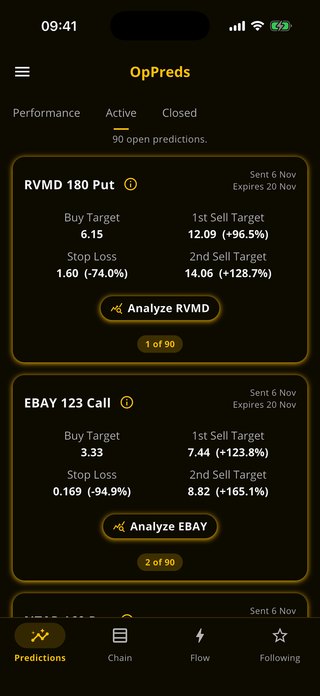
Today's open predictions are in OpPreds
Each one with its contract, buy target, two sell targets and stop loss, followed until it closes, with an alert when a target or the stop is reached.
 Scan with your phone


Questions
What are AI options predictions?
On market days our model picks calls and puts of actively traded U.S. stocks. Each prediction names the strike, the expiry, a buy target, a 1st and a 2nd sell target, and a stop loss. When no setup meets the criteria, none is published. Predictions can be wrong.
How is the simulated result counted?
A portfolio simulation follows each prediction from its own targets. Half is sold at the 1st target and the rest at the 2nd target or the stop loss; if only the stop is reached, all of it closes there. The figure adds up those results, before fees and other trading costs. Real trades can turn out differently.
How often do new predictions come?
At the open on market days, Monday to Friday, except market holidays. A prediction closes when it reaches its 2nd target or its stop loss, or when it expires.
What does reaching a sell target mean?
The option's price reached the level named in the prediction. The 1st sell target is the nearer one and the 2nd the further one.